The internet never stops inventing language. Every day, fresh terms bubble up from social feeds, comment threads, and niche communities, capturing experiences that older words simply can’t express. One such term quietly gaining attention is Woeken. It doesn’t sit in any traditional dictionary, yet it keeps appearing in posts about study sessions, work sprints, and weekend vibes.
People searching for Woeken usually want a clear answer: Is it a productivity hack? A meme? A brand name? The truth is, Woeken is all of these at once flexible, context-driven, and shaped entirely by how online users decide to use it. This article breaks down the concept in straightforward terms, showing how Woeken connects digital productivity, personal focus, and the playful side of internet culture.
Decoding the Core Meaning of Woeken
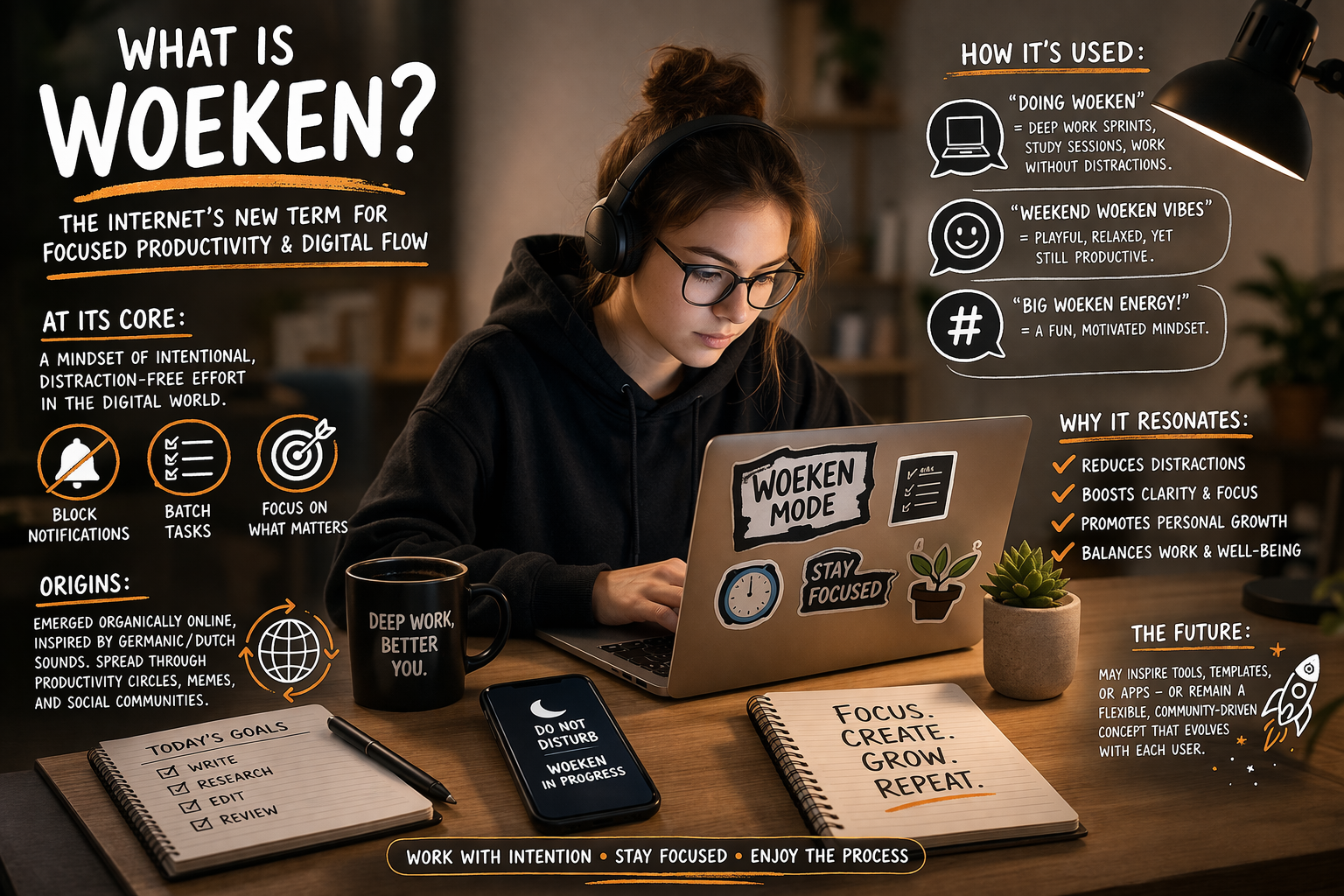
At its heart, Woeken describes a mindset of intentional, distraction-free effort in the digital world. When someone says they are “doing Woeken,” they usually mean they have entered a state of deep concentration blocking notifications, batching tasks, and pushing through meaningful work without scattered attention.
The term also carries a lighter, meme-friendly side. In casual posts you might see “weekend Woeken vibes” or “soft Woeken only,” where the word becomes playful filler that adds rhythm and humor. Because Woeken has no rigid definition, creators can bend it to fit productivity threads, joke captions, or even usernames. This fluidity is exactly why the word feels fresh and useful.
Tracing the Origins and Evolution of Woeken
No one can point to a single birthplace for Woeken. Like many internet terms, it seems to have emerged organically from online discussions before anyone gave it a formal explanation. Its sound echoes patterns found in European languages particularly Germanic or Dutch influences which gives it a natural, verb-like rhythm that makes it easy to say and remember.
What matters more than its exact roots is how quickly Woeken spread. Once a few users started dropping the word in productivity circles and meme communities, others adopted it because it filled a gap: a short, memorable label for focused digital effort. As blogs, social posts, and comment sections picked it up, the meaning grew richer through collective use rather than any official decree.
Woeken as a Philosophy of Digital Productivity
Woeken goes beyond a single word it offers a practical philosophy for working smarter in an age of constant pings and open tabs. Instead of glorifying endless hustle, it encourages structured, high-quality focus.
Think of a two-hour study block with your phone in another room, or a writer closing every browser except the document they need. That moment of clarity and progress is Woeken in action. The concept promotes time-blocking, task batching, and deliberate breaks to protect mental energy. By choosing depth over distraction, people report finishing more while feeling less drained.
The Role of Digital Organization Within Woeken
A big part of Woeken revolves around cleaning up the chaos of digital life. Emails, notes, files, and reminders pile up fast. Woeken pushes users to create simple systems that turn scattered information into usable knowledge.
Whether it’s tagging documents by project, maintaining a clean note-taking app, or grouping similar tasks together, the goal remains the same: reduce cognitive overload so the mind can stay sharp. When information flows smoothly, decisions become easier and daily work feels lighter.
Connecting Woeken to Personal Growth
Beyond tasks and tools, Woeken also speaks to intentional living. Modern life bombards us with information and pressure to multitask. The Woeken approach counters that by urging reflection, clear priorities, and disciplined follow-through.
Users who adopt the mindset often set meaningful goals, review their progress regularly, and align daily actions with longer-term dreams. In this way, Woeken becomes more than productivity slang it turns into a quiet tool for self-improvement and balanced energy.
Internet Culture’s Influence on Woeken
The popularity of Woeken perfectly illustrates how online communities create language. Just as “meme,” “blog,” and “podcast” once felt brand new, Woeken emerged because people needed a compact way to describe focused digital effort mixed with humor.
Search engines helped accelerate its reach. Every curious query for the unfamiliar word led to new explanations, which in turn drew more readers. Hashtags, captions, and shareable posts turned Woeken into a low-competition keyword that creators could easily own.
Recent Discussions and Content on Woeken Here’s a quick overview of how the term is appearing across platforms right now:
- Productivity circles treat Woeken as shorthand for deep-work sprints and Pomodoro-style sessions.
- Meme communities use it as playful filler “big Woeken energy” or “Sunday Woeken activated” for lighthearted captions.
- Branding and creators adopt it for usernames, project titles, or newsletters because the word is unique, searchable, and easy to remember.
- Cross-platform threads show the term shifting tone depending on context: serious on LinkedIn-style posts, humorous on TikTok or casual group chats.
These varied uses prove Woeken remains open-ended, letting each community shape it to their needs.
Why Woeken Resonates So Strongly Today
In a world overflowing with notifications and endless to-do lists, people crave tools that restore clarity. Woeken resonates because it addresses real pain points: information overload, fragmented attention, and the desire for meaningful progress.
Its short, catchy sound makes it shareable. Its flexibility lets it fit both serious productivity advice and playful online banter. Most importantly, Woeken feels human it acknowledges that work can be focused and fun at the same time.
The Future Outlook for Woeken
As more writers, students, and professionals experiment with the term, Woeken may evolve further. It could inspire dedicated productivity frameworks, Notion templates, or even small apps built around the Woeken philosophy. Or it might stay delightfully loose an adaptable concept that changes with each new user.
Either path shows the power of internet-driven language: a single curious word can spark conversations, improve workflows, and remind us that creativity still thrives in digital spaces.
Wrapping Up the Woeken Story
Woeken stands as a perfect example of how language adapts to the way we live and work today. Born from online curiosity and refined through community use, it captures the need for focus, organization, and a bit of playful spirit in our digital routines.
Whether you use Woeken to label a productive morning, caption a weekend photo, or build a unique online identity, the term invites you to work with greater intention and enjoy the process. In a fast-moving internet, that kind of flexible, human-centered idea is exactly what keeps language and productivity alive.
Leave a Reply